
Ovarian Cyst Specialist in Manchester
An ovarian cyst is a fluid-filled sac that forms on or inside an ovary. Most are harmless, cause no symptoms and disappear on their own within a few cycles. A smaller number persist, grow, cause pain or need to be removed. Dr Edmond Edi-Osagie provides private assessment and treatment for ovarian cysts in Manchester, from a single reassuring scan through to keyhole surgery that removes the cyst and preserves the ovary.
MB.BS, MRCOG, MD
Consultant gynaecologist and Senior Lecturer in Reproductive Medicine
Seen within days
Appointments are usually available within days, not months
Self-referral welcome
You do not need a GP letter to arrange an appointment with us
Manchester and Cheadle
City centre clinic and The Alexandra Hospital in Cheshire
The difficulty for most women is knowing which kind of cyst they have. You do not need a GP referral to see us, and an ultrasound scan is usually performed at the first appointment, so most women leave with a diagnosis and a plan the same day.
What an Ovarian Cyst Is
Cysts fall into two broad groups, and the distinction shapes everything that follows. Functional cysts form as part of the normal cycle: a follicle that keeps growing instead of releasing its egg, or a corpus luteum that fills with fluid after ovulation. They are common in women who are still having periods, almost always benign, and usually resolve within two or three cycles.
Pathological cysts are not linked to the cycle and do not go away by themselves. The most common are:
- Endometriomas, sometimes called chocolate cysts, which form when endometriosis affects the ovary and are often painful.
- Dermoid cysts, which develop from egg-making cells and can contain skin, hair or fatty tissue. Almost always benign, but they grow slowly and can twist the ovary.
- Cystadenomas, which grow from the surface of the ovary and can become large.
- Haemorrhagic cysts, where bleeding has occurred into a functional cyst, causing sudden sharp pain that usually settles.
Polycystic ovaries are different again: many small follicles rather than a cyst in the usual sense. They are assessed through our PCOS clinic.
Ask a quick question
Send a short message and we will come back to you.

Symptoms to Look Out For
Many cysts are found by chance on a scan arranged for another reason. When they do cause symptoms, the most common are:
- A dull ache or a feeling of pressure low in the abdomen, usually on one side.
- Pain during sex.
- Bloating or a swollen abdomen that does not settle.
- Needing to pass urine more often, or difficulty emptying the bowel, from pressure on nearby organs.
- Heavier, lighter or more irregular periods than usual.
- Difficulty conceiving, particularly with endometriomas.
When to seek help urgently
Sudden, severe pain on one side, often with nausea or vomiting, can mean a cyst has twisted the ovary or ruptured and needs same-day assessment. Persistent bloating, feeling full quickly, pelvic pain and urinary frequency lasting three weeks or more, particularly after the menopause, need an examination and a scan without delay.
How Ovarian Cysts Are Diagnosed
Diagnosis is usually straightforward. In most cases a single ultrasound tells us what kind of cyst it is and what, if anything, needs to happen next.
Transvaginal ultrasound
Shows the size of the cyst, whether it is simple or complex, and the appearance of the other ovary and the womb.
Blood tests where useful
CA125 and other markers, always interpreted alongside the scan and your menopausal status, never on their own.
A clear risk assessment
Scan and blood results are combined into a risk score. MRI is occasionally added for complex cysts.
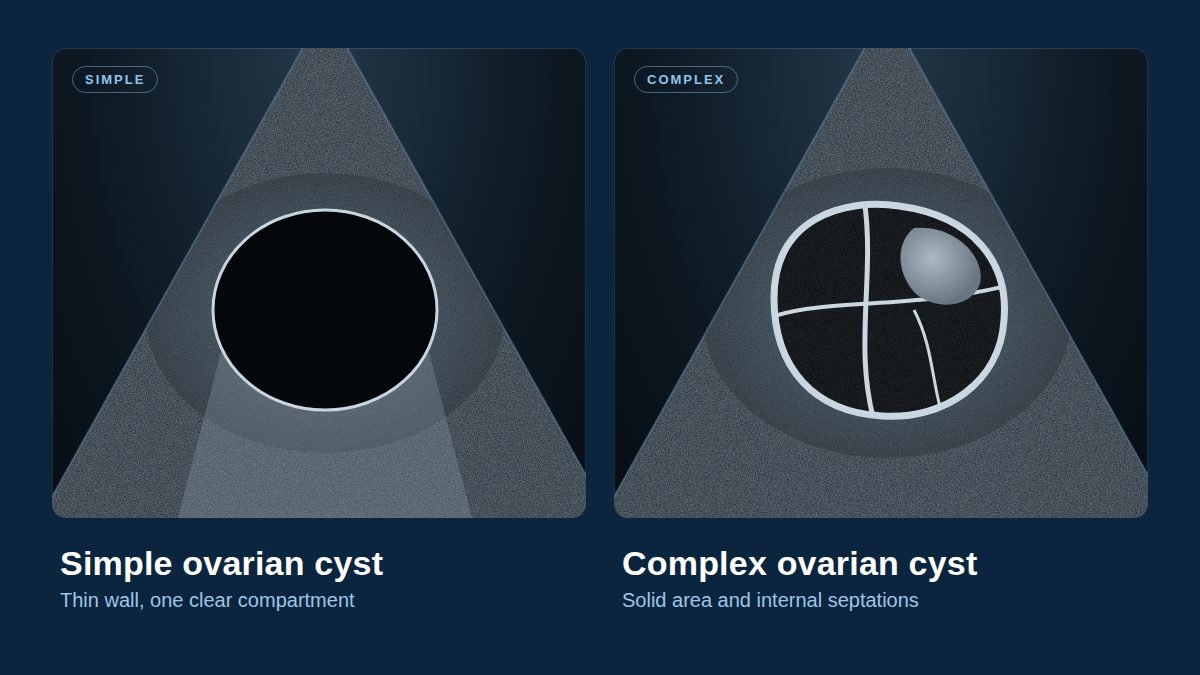
A simple cyst has a thin wall and one clear compartment. A complex cyst has solid areas or internal divisions and is looked at more closely. CA125 can be raised by endometriosis, fibroids and infection as well as by some cysts, which is why it is never read in isolation.
For a fuller explanation of which cysts need treating and which can be left alone, read our guide to when ovarian cysts need treatment.
Treatment Options
Most cysts need no treatment at all. Where treatment is needed, the aim is always to protect healthy ovarian tissue and your fertility.
Watchful Waiting
A simple cyst under about five centimetres in a woman who is still having periods will usually disappear on its own. A repeat scan after eight to twelve weeks confirms that it has gone.
No medication is needed. The combined pill does not make an existing cyst resolve faster, although it can reduce the chance of new functional cysts forming.
Removal That Keeps the Ovary
Persistent, large, painful or complex cysts are removed, nearly always by laparoscopy through three or four small incisions as part of our advanced laparoscopic surgery service.
The cyst is carefully separated from the ovary and removed, leaving healthy ovarian tissue in place. This is normally a day case, with most women back to desk-based work within one to two weeks.
Monitoring Instead of Surgery
Small, simple cysts are common after the menopause and are usually benign. Where the scan is reassuring and CA125 is normal, a cyst can be safely monitored with repeat scans rather than removed.
Anything that grows, changes in appearance or causes symptoms is reassessed.
Cysts and Fertility
If you are trying to conceive, the decision is made with your fertility in mind. Endometriomas can affect egg reserve, and removing them carries its own small risk to the ovary, so timing and technique are weighed carefully, often alongside fertility investigation.

Why Patients Choose Dr Edi-Osagie for Ovarian Cysts
Dr Edi-Osagie is a Senior Consultant Gynaecologist at Manchester University Hospitals and a Senior Lecturer at the University of Manchester, with a long-standing special interest in benign pelvic masses such as ovarian cysts and fibroids.
- Ovary-sparing surgery as the standard approach, including for large and endometriotic cysts.
- Ultrasound at the first appointment, so most women leave with a diagnosis and a plan.
- One consultant throughout: the person who assesses you is the person who operates and sees you afterwards.
- Unhurried appointments where every option, including doing nothing, is explained properly.
Practical Details
- You can refer yourself directly. No GP letter is required, although some insurers ask for one, so check your policy.
- Consultations are held in Manchester city centre and at The Alexandra Hospital, Mill Lane, Cheadle, where surgery is also performed, with free parking.
- Appointments are usually available within a few days, and scans are arranged around your first visit.
- Fees for consultation, scans and surgery are published on our costs page, and we work with all of the major private medical insurers.
Frequently Asked Questions
Can an ovarian cyst go away on its own?
Yes. Functional cysts, which are the most common type in women who are still having periods, usually disappear within two or three cycles. A repeat scan confirms this. Cysts that are not linked to the cycle, such as endometriomas and dermoid cysts, do not resolve on their own.
Does an ovarian cyst mean I have cancer?
Almost never. The overwhelming majority of ovarian cysts are benign, particularly before the menopause. The combination of scan appearance, blood tests and your age allows us to say with confidence whether a cyst needs any further attention.
Will I lose my ovary if the cyst is removed?
In most cases, no. The standard technique removes the cyst and leaves the ovary in place. Removing the whole ovary is reserved for specific situations and is always discussed with you before surgery.
Can I still get pregnant after cyst surgery?
Yes. Ovary-sparing surgery is designed to protect your fertility, and many women conceive after their cyst is removed. If fertility is a priority, tell us at the first appointment so it shapes the plan.
What happens if a cyst bursts?
Most ruptures cause a short episode of sharp pain that settles with simple painkillers. Severe pain, pain with vomiting, feeling faint or bleeding needs urgent assessment the same day, as the ovary can occasionally twist or bleed significantly.
Book an Ovarian Cyst Consultation in Manchester
If you have been told you have a cyst, or you have symptoms that could be caused by one, a single appointment will usually give you a clear answer. Book a consultation online or call 0161 244 8623.
What Our Patients Say

Contact Us
- Manchester ClinicThe Alexandra Hospital, Mill Lane, Cheadle, SK8 2PX
- Telephone0161 244 8623 or 0161 495 7704
- Emailenquiries@manchestergynaecologist.com
- ReferralsSelf-referral welcome, no GP letter required
Make an Enquiry
Tell us briefly what you would like help with and we will be in touch.

